











Verita International School


Athens

2025-2026 Academic Year Enrolments NOW OPEN ​

National Curriculum of England & Wales brought to life through inquiry-based learning and social-emotional curriculum.

Our students learn differently, think fearlessly, and understand the world in new and innovative ways.​

At Verita, we cultivate the skills that allow students to become the leaders of tomorrow. The Verita student is global, interdisciplinary, and boundaryless. They challenge what is possible and find solutions for what is impossible. They are empowered for an unknown future.

The Verita International School Difference

At Verita, while the National Curriculum of England serves as our academic foundation to enrich our learning, we integrate Fieldwork Education’s IEYC, IPC, and IMYC frameworks, creating a deeply interconnected, interdisciplinary, and globally minded learning experience. Social-emotional growth is woven into every aspect of our curriculum through our partnership with Emory University’s Social, Emotional, and Ethical (SEE) Learning program. 

At Verita, we believe that true mastery comes through exploration, active engagement, and emotional intelligence—all nurtured in a safe and supportive environment. When students feel valued and inspired, their ability to grow, question, and achieve knows no bounds.

How We're

Different

Emotional Intelligence

We leverage social-emotional learning methods & curricula to empower students to comprehend & manage emotions so they can ultimately channel them into self-awareness & management, decision-making, and resilience skills.

Inquiry-Based Learning

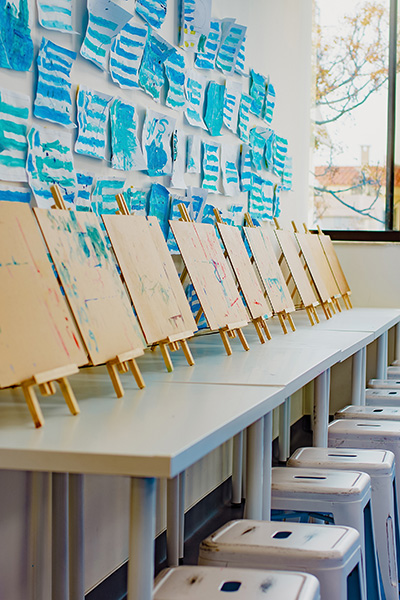
A teaching approach that builds on the idea that educators and students both share responsibility for learning. Students’ questions, ideas, and observations lay at the core of the learning experience. Inquiry methodologies require students to engage in evidence-based reasoning, learning by doing, and creative problem-solving.

Low Student - Teacher Ratio

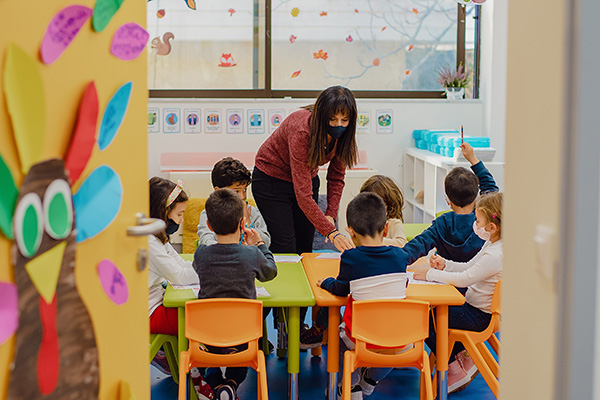
Verita classes reflect our student-centric philosophy with an impressively low student-teacher ratio of 1:9. The small size of our classes, combined with our inspiring & highly qualified teaching faculty guarantee that students get independent attention and tailor-made differentiated support.

Well-being

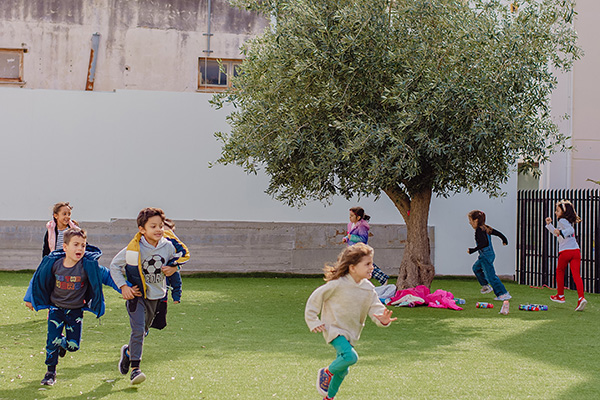
Verita actively builds internal programs that promote student and staff well-being. We ensure a space where students feel physically and emotionally safe with a caring adult looking after the progress and acting as an advocate for each child. Most importantly, we ensure that kindness is the center of everything we do.

Service Learning Projects

Verita students must participate in meaningful community service which exposes them to active engagement within communities or environments in need. Using curriculum objectives and innovative approaches, our students work on real-world problems.

Student Agency

Verita promotes skills in students where they build their own, self-directed learning abilities and strategies, allowing them to develop a higher degree of autonomy and self-mastery. Student agency is “the ability of students to act independently within a given environment and assume an amount of control and empowerment”.

British English

Curriculum

IGCSE & A-Levels

New Secondary Campus

IEYC, IPC & IMYC

International Curriculum

Greek

Language Lessons Daily

Inquiry-Based

Learning

Social Emotional

Learning

Education Roadmap

Early Years

2 1/2 - 5 years old

Primary School

5 - 11 years old

Secondary School

11 - 18 years old

Meet Verita

Testimonials

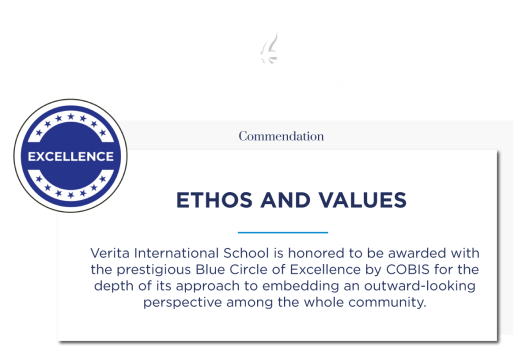
COBIS-Blue-Circle-Excelence
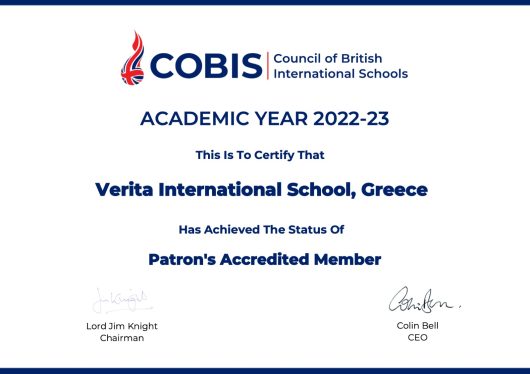
cobis_2
@veritaschool
Verita International School Greece

@veritaschool

Preschool - Year 11 and growing. 🌳 Kind Hearts, Creative Minds, Curious Souls. 💙 TikTok @veritaschoolgr
  • We asked our Secondary students what they were most nervous about before making the move from Middle School. Getting lost. Harder classes. New people. Bigger spaces. Standing out. Starting over.

Big changes have a way of doing that. They introduce uncertainty before they introduce confidence, and questions before answers. Feeling nervous doesn’t mean something is wrong. It means something new is beginning. With time, familiarity, and the right support, those early worries start to shift. Students find their way, build routines, discover subjects that spark their curiosity, and grow into a sense of independence that feels earned.

Watching that growth is something we’re incredibly proud of. Seeing students step into new spaces, face their fears, and slowly realise they belong exactly where they are. To any students preparing to move up soon: it’s okay to feel nervous. Take your time. Ask questions. Trust yourself. You’re more ready than you think.
  • Through the International Primary Curriculum, learning at Verita is designed to be hands-on, inquiry-led, and connected across subjects and year groups. Educational research shows that students involved in active, project-based learning can retain up to 75 percent of what they learn, compared to around 10 to 20 percent through passive instruction. These approaches also consistently strengthen communication, collaboration, and critical-thinking skills.

This belief in how learning works shaped a whole-school moment of shared experience. Our Share and Learn Exhibition brought students from across multiple year groups together to present projects they had developed through exploration, creativity, and teamwork. Learning moved beyond individual classrooms. Younger students learned by seeing what learning can grow into, while older students deepened their understanding by explaining their thinking, answering questions, and reflecting on their process.

This is why IPC matters to us. It creates continuity across the Primary years and turns learning into something communal, where understanding deepens through sharing, discussion, and reflection.
  • Where does plastic actually go after we throw it away?

Our Verita Secondary students spent time outside the classroom and along Kavouri Beach and the nearby parks, learning directly from eco_.planete and its founder, Xavier, about the real impact microplastics have on our beaches and natural spaces.

What began as interactive games and scavenger hunts quickly turned into moments of discovery. Students learned how microplastics make their way into the environment, how everyday consumption choices play a role, and why these small decisions matter more than they often seem. Seeing the issue up close made the learning feel real, grounded, and personal, transforming conversation into understanding and understanding into action. This is what learning looks like when students are given the space to explore, ask questions, and connect knowledge to the world around them.
  • As Verita moves into its 2.0 academic framework, academic rigor is no longer about covering more content. It’s about going deeper with it.

With over 21 years of international educational leadership experience, Tim Springham has helped develop academically successful schools across multiple contexts and is part of the wider Verita Romania leadership network. He now supports Verita as part of our academic leadership team, helping shape and strengthen Verita 2.0.

At the core of this approach is Bloom’s Taxonomy, a framework that guides students from understanding information to analysing, evaluating, and applying it in real-world contexts. By intentionally using question starters and tasks at different levels of thinking, teachers help students move beyond memorisation and into meaningful learning.
  • Kindness isn’t new here. It’s part of how our staff and students show up, in ways that don’t ask for attention.

Last week, we slowed down just enough to notice it. In the small moments, the quiet choices, the way our community looks out for one another without being told. These are a few highlights from Kindness Week at Verita.
  • We asked a group of soon-to-be Middle School students two simple questions. What are you most nervous about? And what are you most excited for?

Their answers offer a real glimpse into the transition from Primary to Middle School, the mix of anticipation, uncertainty, confidence, and curiosity that comes with stepping into something new. Bigger spaces, new subjects, more independence, and the challenge of finding your footing along the way.

Sometimes, the most powerful way to support students through moments like this is not by rushing to reassure or solve, but by listening. By giving them space to share what they’re feeling and taking those feelings seriously. When students feel heard, they feel understood. And that sense of understanding builds the confidence they need to step forward, even when the next stage feels a little intimidating.
  • Year 3 explored different parts of the world through a series of learning stations, each offering a new way to connect with geography. Using maps, art, architecture, and hands-on tasks, students examined how places are shaped, how people respond to their environment, and how culture and creativity reflect geography in action.

These experiences are designed to spark interest first. When students are curious, learning sticks. By following the International Primary Curriculum (IPC), lessons are built to be cross-disciplinary, practical, and meaningful, allowing children to make connections across subjects rather than learning in isolation.

Geography becomes more than locations on a map. It becomes a story told through structure, design, colour, and context, encouraging students to ask questions, think critically, and stay genuinely engaged in the world around them
We asked our Secondary students what they were most nervous about before making the move from Middle School. Getting lost. Harder classes. New people. Bigger spaces. Standing out. Starting over. Big changes have a way of doing that. They introduce uncertainty before they introduce confidence, and questions before answers. Feeling nervous doesn’t mean something is wrong. It means something new is beginning. With time, familiarity, and the right support, those early worries start to shift. Students find their way, build routines, discover subjects that spark their curiosity, and grow into a sense of independence that feels earned. Watching that growth is something we’re incredibly proud of. Seeing students step into new spaces, face their fears, and slowly realise they belong exactly where they are. To any students preparing to move up soon: it’s okay to feel nervous. Take your time. Ask questions. Trust yourself. You’re more ready than you think.
2 days ago
View on Instagram |
1/7
Through the International Primary Curriculum, learning at Verita is designed to be hands-on, inquiry-led, and connected across subjects and year groups. Educational research shows that students involved in active, project-based learning can retain up to 75 percent of what they learn, compared to around 10 to 20 percent through passive instruction. These approaches also consistently strengthen communication, collaboration, and critical-thinking skills. This belief in how learning works shaped a whole-school moment of shared experience. Our Share and Learn Exhibition brought students from across multiple year groups together to present projects they had developed through exploration, creativity, and teamwork. Learning moved beyond individual classrooms. Younger students learned by seeing what learning can grow into, while older students deepened their understanding by explaining their thinking, answering questions, and reflecting on their process. This is why IPC matters to us. It creates continuity across the Primary years and turns learning into something communal, where understanding deepens through sharing, discussion, and reflection.
4 days ago
View on Instagram |
2/7
Where does plastic actually go after we throw it away? Our Verita Secondary students spent time outside the classroom and along Kavouri Beach and the nearby parks, learning directly from eco_.planete and its founder, Xavier, about the real impact microplastics have on our beaches and natural spaces. What began as interactive games and scavenger hunts quickly turned into moments of discovery. Students learned how microplastics make their way into the environment, how everyday consumption choices play a role, and why these small decisions matter more than they often seem. Seeing the issue up close made the learning feel real, grounded, and personal, transforming conversation into understanding and understanding into action. This is what learning looks like when students are given the space to explore, ask questions, and connect knowledge to the world around them.
7 days ago
View on Instagram |
3/7
As Verita moves into its 2.0 academic framework, academic rigor is no longer about covering more content. It’s about going deeper with it. With over 21 years of international educational leadership experience, Tim Springham has helped develop academically successful schools across multiple contexts and is part of the wider Verita Romania leadership network. He now supports Verita as part of our academic leadership team, helping shape and strengthen Verita 2.0. At the core of this approach is Bloom’s Taxonomy, a framework that guides students from understanding information to analysing, evaluating, and applying it in real-world contexts. By intentionally using question starters and tasks at different levels of thinking, teachers help students move beyond memorisation and into meaningful learning.
1 week ago
View on Instagram |
4/7
Kindness isn’t new here. It’s part of how our staff and students show up, in ways that don’t ask for attention.

Last week, we slowed down just enough to notice it. In the small moments, the quiet choices, the way our community looks out for one another without being told. These are a few highlights from Kindness Week at Verita.
Kindness isn’t new here. It’s part of how our staff and students show up, in ways that don’t ask for attention.

Last week, we slowed down just enough to notice it. In the small moments, the quiet choices, the way our community looks out for one another without being told. These are a few highlights from Kindness Week at Verita.
Kindness isn’t new here. It’s part of how our staff and students show up, in ways that don’t ask for attention.

Last week, we slowed down just enough to notice it. In the small moments, the quiet choices, the way our community looks out for one another without being told. These are a few highlights from Kindness Week at Verita.
Kindness isn’t new here. It’s part of how our staff and students show up, in ways that don’t ask for attention.

Last week, we slowed down just enough to notice it. In the small moments, the quiet choices, the way our community looks out for one another without being told. These are a few highlights from Kindness Week at Verita.
Kindness isn’t new here. It’s part of how our staff and students show up, in ways that don’t ask for attention.

Last week, we slowed down just enough to notice it. In the small moments, the quiet choices, the way our community looks out for one another without being told. These are a few highlights from Kindness Week at Verita.
Kindness isn’t new here. It’s part of how our staff and students show up, in ways that don’t ask for attention.

Last week, we slowed down just enough to notice it. In the small moments, the quiet choices, the way our community looks out for one another without being told. These are a few highlights from Kindness Week at Verita.
Kindness isn’t new here. It’s part of how our staff and students show up, in ways that don’t ask for attention.

Last week, we slowed down just enough to notice it. In the small moments, the quiet choices, the way our community looks out for one another without being told. These are a few highlights from Kindness Week at Verita.
Kindness isn’t new here. It’s part of how our staff and students show up, in ways that don’t ask for attention.

Last week, we slowed down just enough to notice it. In the small moments, the quiet choices, the way our community looks out for one another without being told. These are a few highlights from Kindness Week at Verita.
Kindness isn’t new here. It’s part of how our staff and students show up, in ways that don’t ask for attention.

Last week, we slowed down just enough to notice it. In the small moments, the quiet choices, the way our community looks out for one another without being told. These are a few highlights from Kindness Week at Verita.
Kindness isn’t new here. It’s part of how our staff and students show up, in ways that don’t ask for attention. Last week, we slowed down just enough to notice it. In the small moments, the quiet choices, the way our community looks out for one another without being told. These are a few highlights from Kindness Week at Verita.
2 weeks ago
View on Instagram |
5/7
We asked a group of soon-to-be Middle School students two simple questions. What are you most nervous about? And what are you most excited for? Their answers offer a real glimpse into the transition from Primary to Middle School, the mix of anticipation, uncertainty, confidence, and curiosity that comes with stepping into something new. Bigger spaces, new subjects, more independence, and the challenge of finding your footing along the way. Sometimes, the most powerful way to support students through moments like this is not by rushing to reassure or solve, but by listening. By giving them space to share what they’re feeling and taking those feelings seriously. When students feel heard, they feel understood. And that sense of understanding builds the confidence they need to step forward, even when the next stage feels a little intimidating.
2 weeks ago
View on Instagram |
6/7
Year 3 explored different parts of the world through a series of learning stations, each offering a new way to connect with geography. Using maps, art, architecture, and hands-on tasks, students examined how places are shaped, how people respond to their environment, and how culture and creativity reflect geography in action. These experiences are designed to spark interest first. When students are curious, learning sticks. By following the International Primary Curriculum (IPC), lessons are built to be cross-disciplinary, practical, and meaningful, allowing children to make connections across subjects rather than learning in isolation. Geography becomes more than locations on a map. It becomes a story told through structure, design, colour, and context, encouraging students to ask questions, think critically, and stay genuinely engaged in the world around them
2 weeks ago
View on Instagram |
7/7

Are you ready to start your child on

A Journey Without Limits?

Verita students graduate as well-rounded, globally aware individuals equipped with the leadership, critical thinking, and practical skills to excel in any field they choose. Our students leave Verita not just with academic excellence but with the resilience, adaptability, and ethical compass necessary to navigate an increasingly complex world.

We believe that education should empower students to think beyond borders, embrace innovation, and take action in shaping a better future. 

Our alumni have an opportunity to go on to study at top universities worldwide, pursue careers in diverse industries, and take on leadership roles that make a difference. The Verita experience goes beyond traditional academics—it is a transformative journey that fosters creativity, integrity, and a lifelong passion for learning.