Across education systems worldwide, researchers keep seeing the same pattern. For a meaningful number of students, the first year of secondary school brings a drop in confidence, motivation, and sometimes achievement. It is not because students suddenly stop caring. It is because the environment shifts quickly, while young people are changing rapidly.
That insight matters because it points to a clear solution. If the environment is built to meet the needs of early adolescence, students settle in, feel a sense of belonging, and maintain their momentum. If the environment becomes more fragmented and impersonal just when students most need steady relationships and clear routines, many will stumble.
We are not guessing about this at Verita. We are responding to the evidence with a design.
What the data tells us about the transition
A helpful way to think about transition is this: most students will be fine, some will thrive, and a real minority will struggle unless the school builds the right conditions.
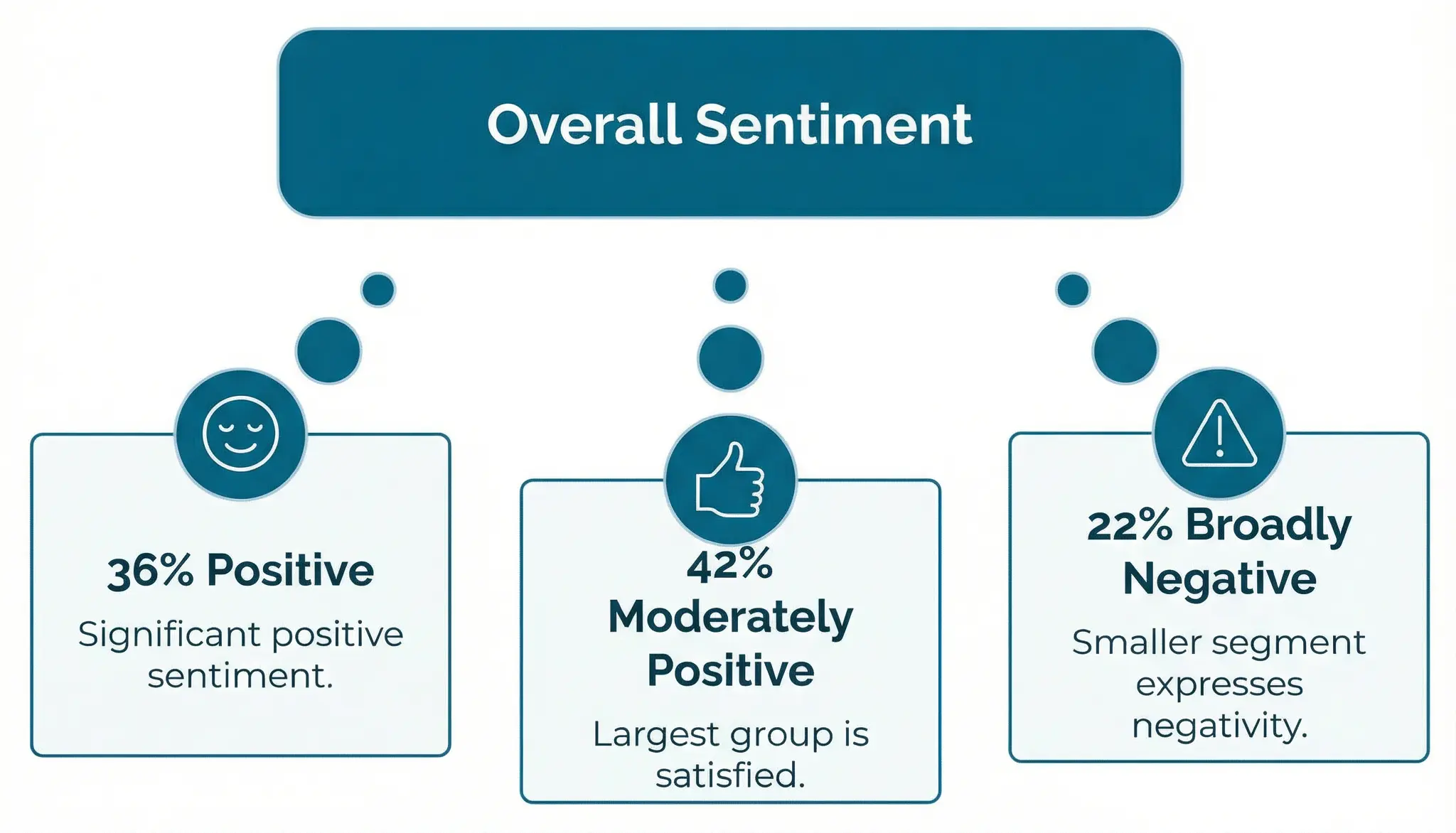
In a large, longitudinal international dataset, 36% of children experienced a positive transition and 42% a moderately positive transition. Still, 22% experienced a broadly negative transition, which is not a small number when you consider a whole year group.
That same report points to something hopeful and very practical. Belonging in Year 7 is powerfully shaped by peer friendships, teacher relationships, and support for learning at school and at home. In other words, schools can actively build the conditions that protect students during the change.
Verita Middle Years: One campus, One community
Our Middle Years model covers Years 7 to 9.
It is not a separate campus. Students are on the same Secondary campus, with a Middle Years identity and a structure that feels more like Primary where it counts: a homeroom base, a steady daily rhythm, and a team approach that keeps students known, seen, and supported as they grow into independence.
This is a direct response to what the research calls “fit.” When schools shift to larger, more departmentalised systems, students often face more teacher changes, more switching, and less consistent adult support. Research on stage environment fit argues that this mismatch is a key reason motivation and engagement can fall in early adolescence.
Our goal is simple: keep standards high and remove avoidable friction.
The structures we are implementing, and why they work
Middle Years at Verita is built around three needs that research repeatedly highlights: continuity in learning, stable relationships, and a clear sense of belonging.
-
Continuity in learning
We bridge Primary to Secondary with shared expectations and a clear academic handover. Early checks in English and Maths help us place students and plan support quickly, so students do not waste time repeating what they already know, and they also do not get left behind quietly. This approach matches what research reviews highlight as central to a successful transition: continuity, clear expectations, and learning support that starts early.
-
Stable relationships
Students have a homeroom anchor and a consistent daily touchpoint with an adult who knows them well. That matters because the move into secondary often spreads a child across many teachers and settings. When the number of meaningful adult relationships drops, it becomes easier for students to feel anonymous and harder for staff to notice early signs of struggle. The research clearly describes this and shows that school design can reduce the decline.
-
Belonging by design
We treat belonging as a core condition for learning, not an optional extra. Peer friendships and teacher relationships repeatedly emerge as drivers of belonging during transition, and belonging supports engagement. That is why Middle Years includes structured support for friendships, clear routines that reduce social stress, and rapid follow-up when issues appear.
IMYC and the Middle Years design
In our planning, the International Middle Years Curriculum is a strong companion because it is built around the adolescent learner.
IMYC identifies six needs of the teenage brain through the IMPART framework: interlinking learning, making meaning, peers, agency, risk-taking, and transition.
This matters because transition is not only about calm logistics. It is also about meaning, voice, peer connection, and safe challenge.
IMYC also frames learning across three sets of goals: subject goals, personal goals, and international goals. This fits Verita’s view that academic progress and human development belong together, especially during the ages 11 to 14.
What parents should expect
You should expect your child to grow in independence during the Middle Years, not be pushed into independence before they are ready.
That means students learn how to manage a fuller schedule, multiple subjects, and higher expectations, while still having a stable base and a team keeping an eye on the whole child. By the time students reach the IGCSE years, they step into that more assessment-driven phase with stronger habits, clearer confidence, and a sense that they belong in the work.
That is the heart of Verita 2.0. We see what education research is telling us about this age. We respect it. Then we build the school day around it.
References
NSW Centre for Education Statistics and Evaluation, The role of student engagement in the transition from primary to secondary school (Tell Them From Me survey analysis).
Evans et al., A Review of the Academic and Psychological Impact of the Transition to Secondary Education (Frontiers in Psychology, 2018).
Eccles and Roeser, Schools, Academic Motivation, and Stage Environment Fit (chapter PDF).
International Curriculum Association (ICA). IMYC: IMPART (Interlinking, Making meaning, Peers, Agency, Risk-taking, Transition) framework. (Accessed 14 Dec 2025).